
Why is my hot water cloudy, milky or smelly?
The glass test that tells harmless air bubbles from sediment, what a rotten egg smell means, and when discoloured hot water points to the cylinder.
Last reviewed 2026-10-28
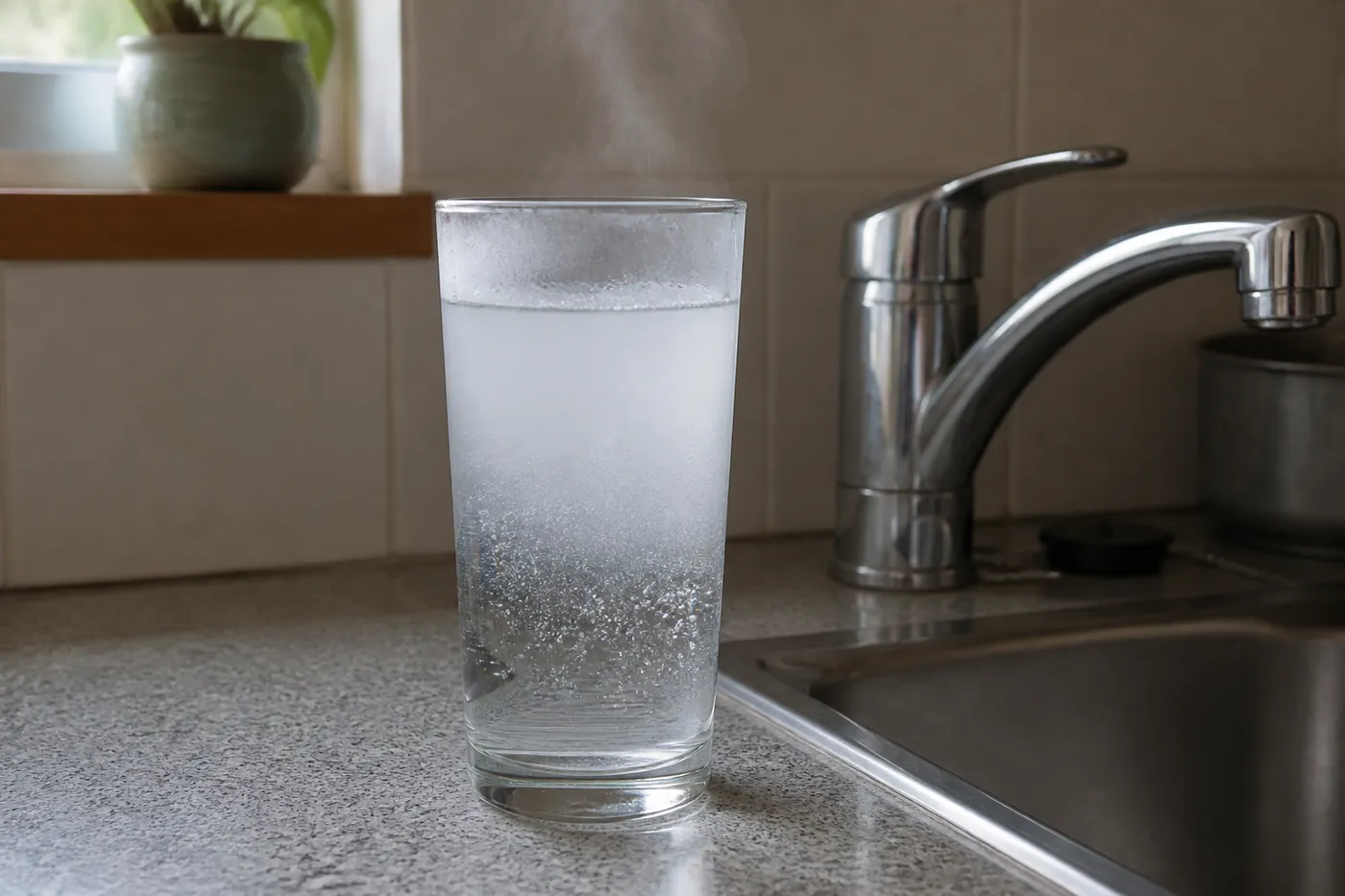
The glass test
Fill a clear glass from the hot tap and leave it on the bench for two minutes.
- It clears from the bottom up: tiny air bubbles. Water holds dissolved air, and heating plus the drop in pressure at the tap releases it. Harmless, and common on mains pressure systems.
- It stays cloudy, or white bits settle on the bottom: something in the water. On an enamel cylinder this can be material from the anode or mineral build-up. Worth having the cylinder looked at and flushed.
Rotten egg smell
A sulphur or rotten egg smell from the hot tap only, not the cold, usually comes from the cylinder: bacteria in the water reacting with a magnesium anode to make hydrogen sulphide. Flushing the cylinder and changing the anode type are the usual fixes. See what the anode does. If the cold smells too, the cause is in the supply, not the cylinder.
Brown or rusty hot water
Rust-coloured hot water when the cold is clear can mean the inside of the cylinder is corroding, especially on an older enamel cylinder whose anode is used up. If it comes with water around the base, the tank is failing: see how long cylinders last.
After plumbing work
Discoloured water straight after a cylinder or pipe change is usually disturbed sediment and clears after running the taps.
Bore and tank water
Bore and tank water change what a cylinder can tolerate. Do not fit stainless on bore water; check the manufacturer's water limits before choosing. See enamel, copper or stainless.