
Gas hot water NZ: natural gas or LPG bottles, where it can go, and cost against electric
Natural gas or 45 kg LPG bottles, the clearances that decide where a gas water heater and the bottles can go, and what a year of hot water costs on gas against an electric cylinder and a heat pump. Rinnai Infinity A26, HD56 and Rheem Stellar 160L.
Last reviewed 2026-10-28
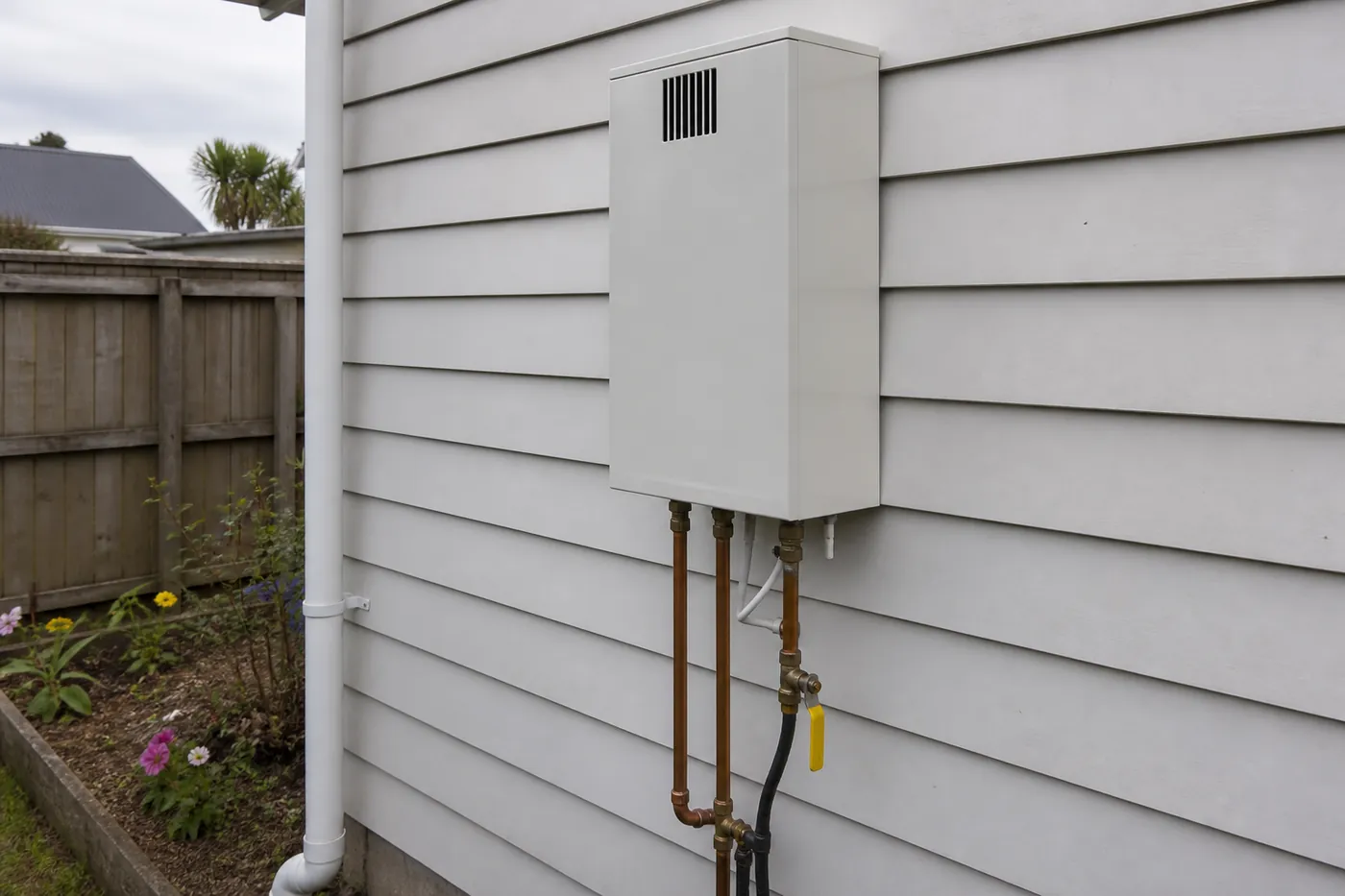
Gas hot water in New Zealand is now mostly continuous flow: a box on the outside wall that heats water as it passes through, so it does not run out. Whether it suits your house comes down to three things: which gas you can get, where the unit and the bottles are allowed to go, and what the gas costs you each year.
The gas water heaters we sell
| Model | Litres | Size (mm) | Element | Lining | Siting | Cylinder warranty | Price incl GST |
|---|---|---|---|---|---|---|---|
| Rinnai Infinity A26 | 0 | 351 w x 531 h x 195 d | - | - | External wall mounted | - | $1,420 |
| Rinnai Infinity A26 | 0 | 351 w x 531 h x 195 d | - | - | External wall mounted | - | $1,490 |
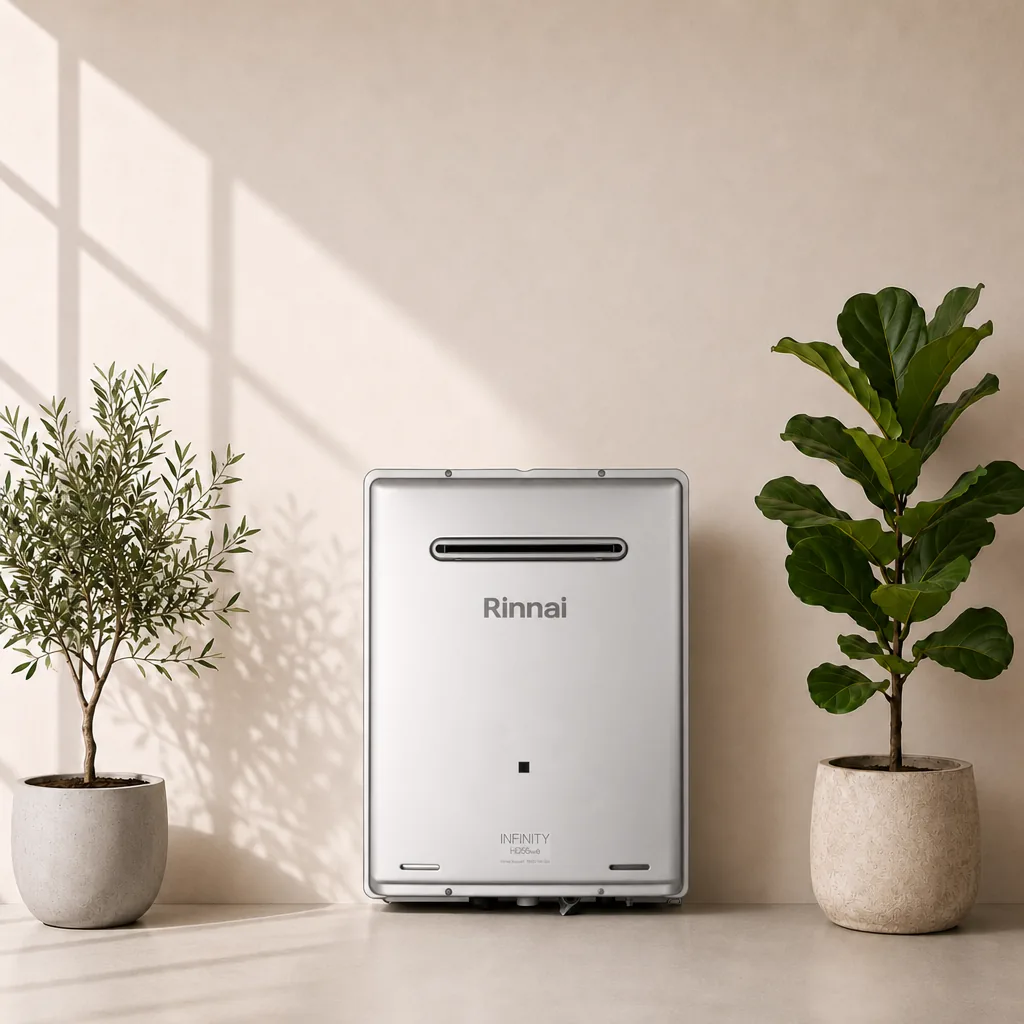
| Rinnai Infinity HD56 | 0 | 470 w x 600 h x 271 d | - | - | External wall mounted | - | $4,210 |
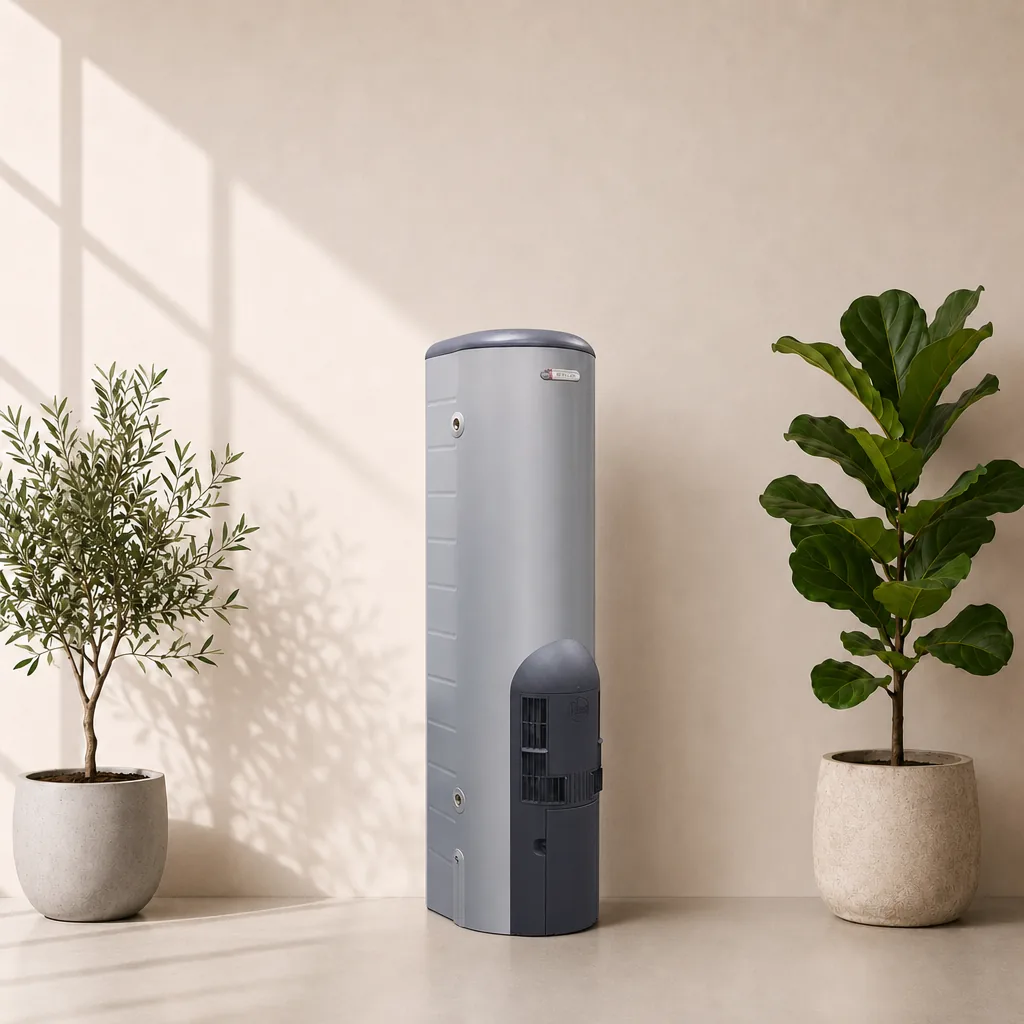
| Rheem 850360N0Z | 160 | 485 w x 1900 h x 558 d | - | - | External | 10 yr | $3,430 |
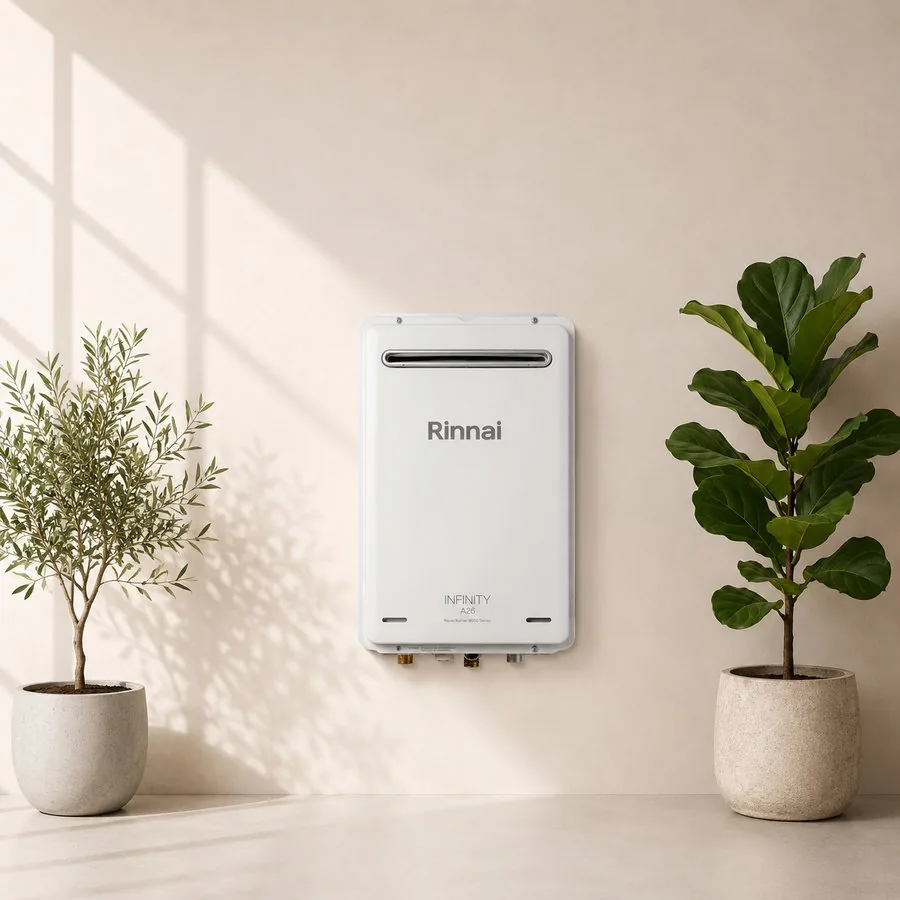
- Rinnai Infinity A26: up to 26 litres a minute at a 25°C rise, enough for two showers at once in most homes. Rinnai's input rating is 16.3 to 199 MJ/h.
- Rinnai Infinity HD56: the larger continuous flow unit for bigger demand. Natural gas.
- Rheem Stellar 160L: a gas storage cylinder, 160 litres, mains pressure, installed outside. Natural gas.
Natural gas or LPG?
Natural gas comes by pipe from the street, metered. Only some streets have it; if there is no gas main, the choice is LPG. LPG comes in 45 kg bottles delivered to the house, usually two side by side with a changeover valve so one is always full.
The appliance is built for one or the other. Rinnai state the A-Series must be specified as natural gas or LPG at the time of purchase, which is why the A26 is two separate products: A26 natural gas $1,420 and A26 LPG $1,490. Order the one that matches your supply.
Where a gas water heater can go
An external unit's flue is on its front face, and AS/NZS 5601.1 sets how far that flue has to be from windows, meters and the eaves. These are the main clearances on Rinnai's sheet for the A-Series:
| Flue terminal clearance | Minimum |
|---|---|
| Below eaves, balconies and other projections | 300 mm |
| Above the ground or a deck | 300 mm (Rinnai recommend 1500 mm) |
| From a return wall or external corner | 500 mm |
| From a gas meter | 1000 mm |
| From an electricity meter or fuse box (the zone below runs to the ground) | 500 mm |
| From a drain or soil pipe | 75 mm |
| From a structure facing the flue | 500 mm |
| From a mechanical air inlet, including a spa blower | 1000 mm |
| Horizontally from an openable window or door, fan-assisted, in the direction of discharge | 1500 mm |
| Vertically below an openable window or vent, appliances over 150 MJ/h | 1500 mm |
Adapted by Rinnai from AS/NZS 5601:2022. There are also rules for a flue under a covered area such as a carport. The gasfitter checks the site against the current standard and issues a gas certificate when the job is done. Gas fitting is restricted work for a licensed gasfitter.
Where LPG bottles can go
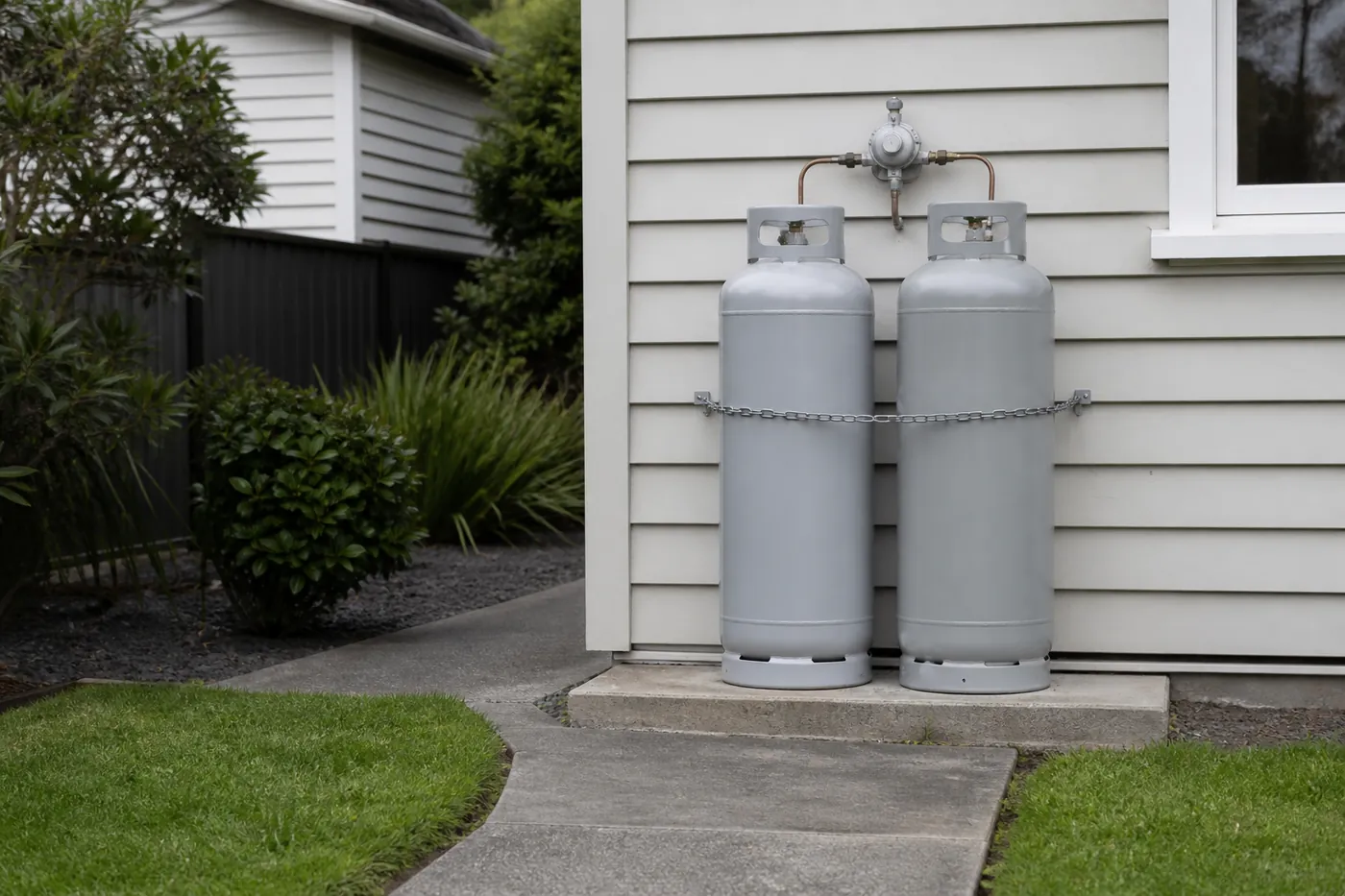
Bottles have their own rules, from the GasNZ code of practice and AS/NZS 1596. Genesis publish a delivery and installation checklist that sums them up well:
- Hazardous area: 500 mm above and beside the bottle valves, widening to 1500 mm at the base. Nothing that can ignite gas inside it, and that includes a heat pump unit, earthing rods, communication wiring and the flue of a gas appliance.
- At least 1000 mm from anything readily ignitable, such as dry grass or paper.
- A firm, level, non-combustible base, not on soil, where water cannot pool.
- Room for at least two bottles, chained across their bodies.
- An 800 x 800 mm clear space above the bottles and 600 mm clear in front.
- A clear path at least 600 mm wide, no more than 75 m from where the truck parks, and not through the garage or house.
- No steep access: paths no steeper than 20 degrees, steps no more than 125 mm high and 1.5 m of rise in total, and a firm surface with grip in the wet. Steep driveways are assessed before the supplier agrees to deliver, and they can refuse. On a steep section, check delivery before choosing LPG.
- Away from drains, pits and openings into the building: LPG is heavier than air and collects in low spots.
The heat pump point catches people out. If you are thinking of a heat pump air conditioner or a heat pump cylinder later, it cannot go next to the gas bottles.
Gas cost against electric
The fair comparison is the cost of one kWh of heat in the water.
A year of hot water
Using EECA's guide of about 2,500 kWh of hot water a year for 3 to 4 people:
| Option | Energy cost a year | What is not included |
|---|---|---|
| Electric cylinder | $1,050 | Less on a controlled or night rate |
| LPG continuous flow | $705 to $785 (about 4.0 bottles) | The heater's own losses, bottle rental |
| Heat pump cylinder | about $350 | Uses EECA's real-world factor, not the rated COP |
Natural gas depends on your retailer's price per kWh, so check your bill. What is fixed is the daily charge: in Auckland, Vector's network charge alone is 111.76 cents a day before GST from 1 October 2026, about $469 a year with GST, before any gas is used. The retailer adds their own share on top. If gas only heats the water, that fixed cost is a big part of the bill.
The short version: on anytime power, LPG and electric land in a similar range once the gas heater's losses are counted, and a heat pump costs much less to run than either. See is a heat pump worth it.
When gas makes sense
- The house already has natural gas for cooking or heating, so the daily charge is being paid anyway.
- You want hot water that does not run out: a continuous flow unit heats as you use it.
- There is no room inside for a cylinder: continuous flow units hang on the outside wall.
Things to know before choosing gas
- A continuous flow unit needs electricity to run: no power, no hot water.
- Rinnai recommend servicing every two years.
- Rinnai state hard or acidic water needs treatment for the A-Series.
- The A26 is not suitable as a spa or pool heater or for hydronic heating.
Comparing options? See heat pump or electric, heat pump cylinders and all cylinder prices. Prices include GST and are supply only.